
Mornings in Gasaba village, set in the high reaches of the Eastern Ghats in Peda Bayalu mandal of Alluri Sitharama Raju district of Andhra Pradesh, begin quietly. The sun filters through patches of trees in the winding ghat road leading to a two-acre patch at the edge of the village.
Bujjamma bends over a row of leafy greens, sorting plants set aside for seed. Her saree is hitched high for ease of movement. The rows of metallic earrings and nose rings on her face glint as she works. She is one of the village’s seed savers, who grow, observe and select native seeds for distribution. A short walk away stands her modest home, a red-tiled structure with mud-plastered walls, where packets of heirloom seeds are stored with care.
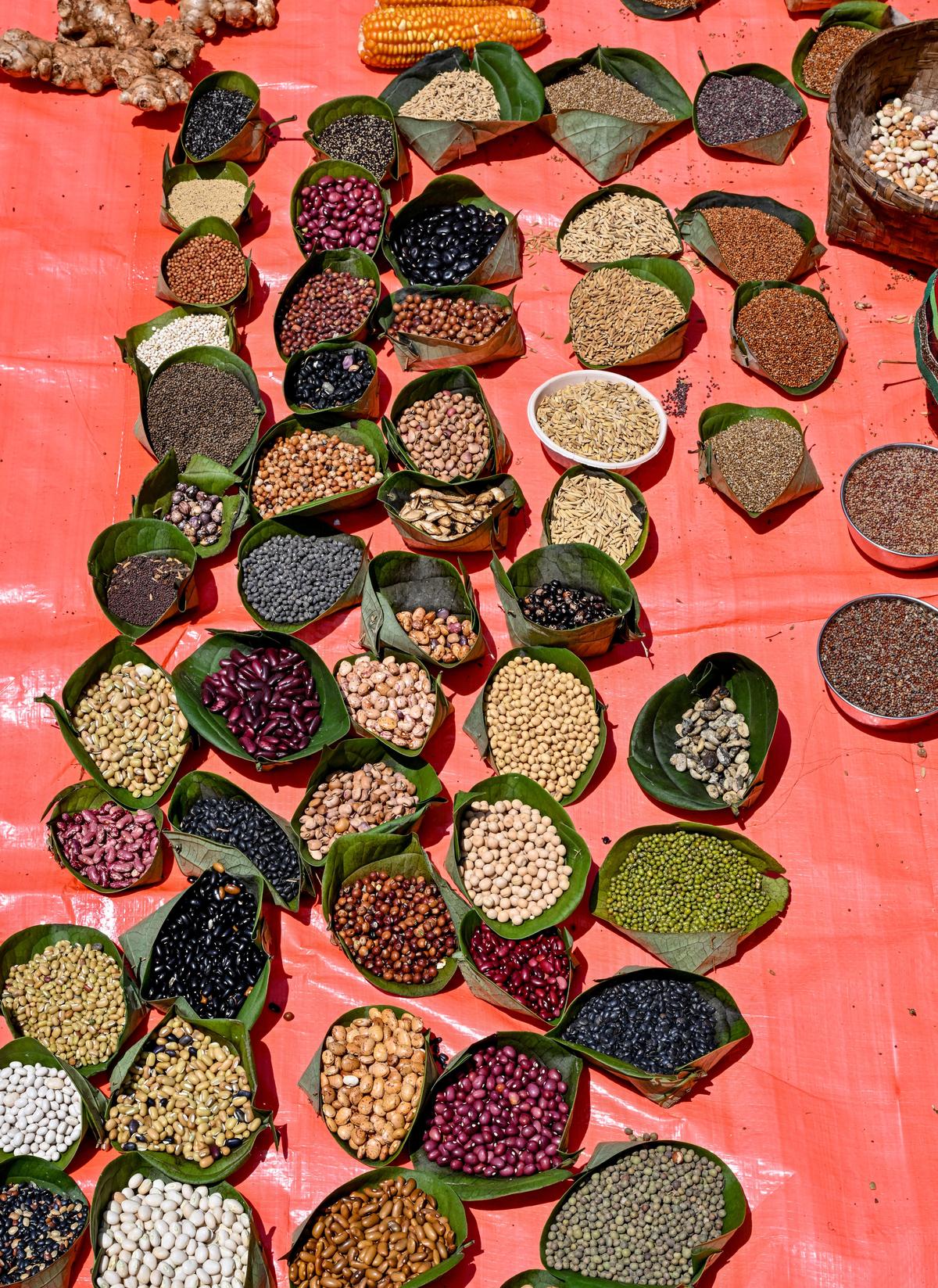
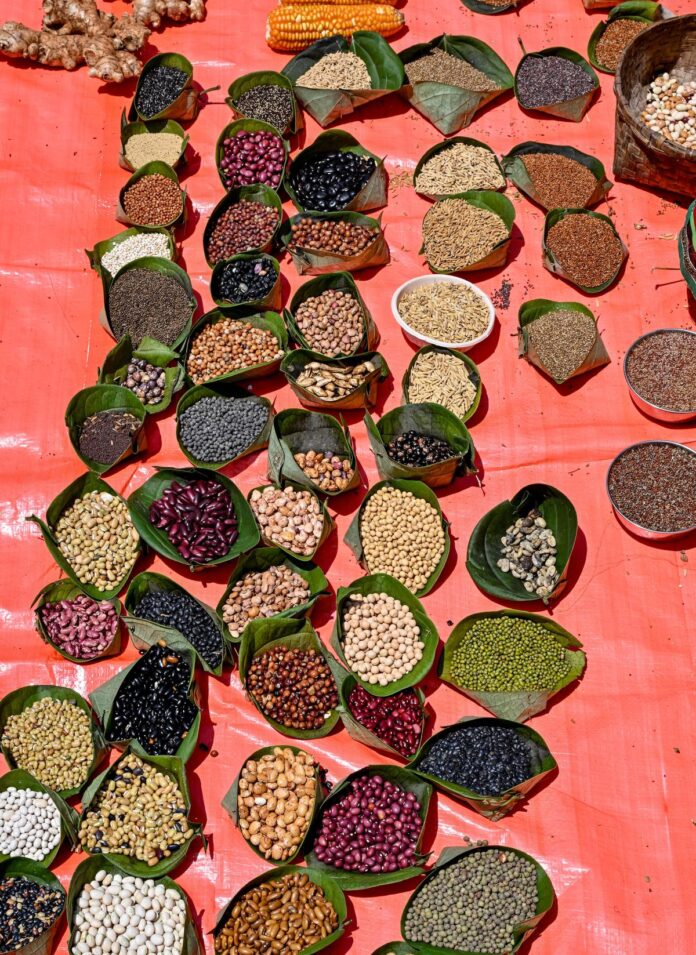
Native seed varieties being displayed by seed savers at Gasaba village in the Eastern Ghats of Andhra Pradesh.
| Photo Credit:
KR Deepak
Nearby, another farmer works through a cluster of gourds, selecting those that will be left to ripen fully. Between them stands a farmer-researcher, notebook in hand, observing and occasionally offering inputs. This patch functions as a block seed multiplication site, where native seed varieties are regenerated before being distributed across 18 nearby villages.
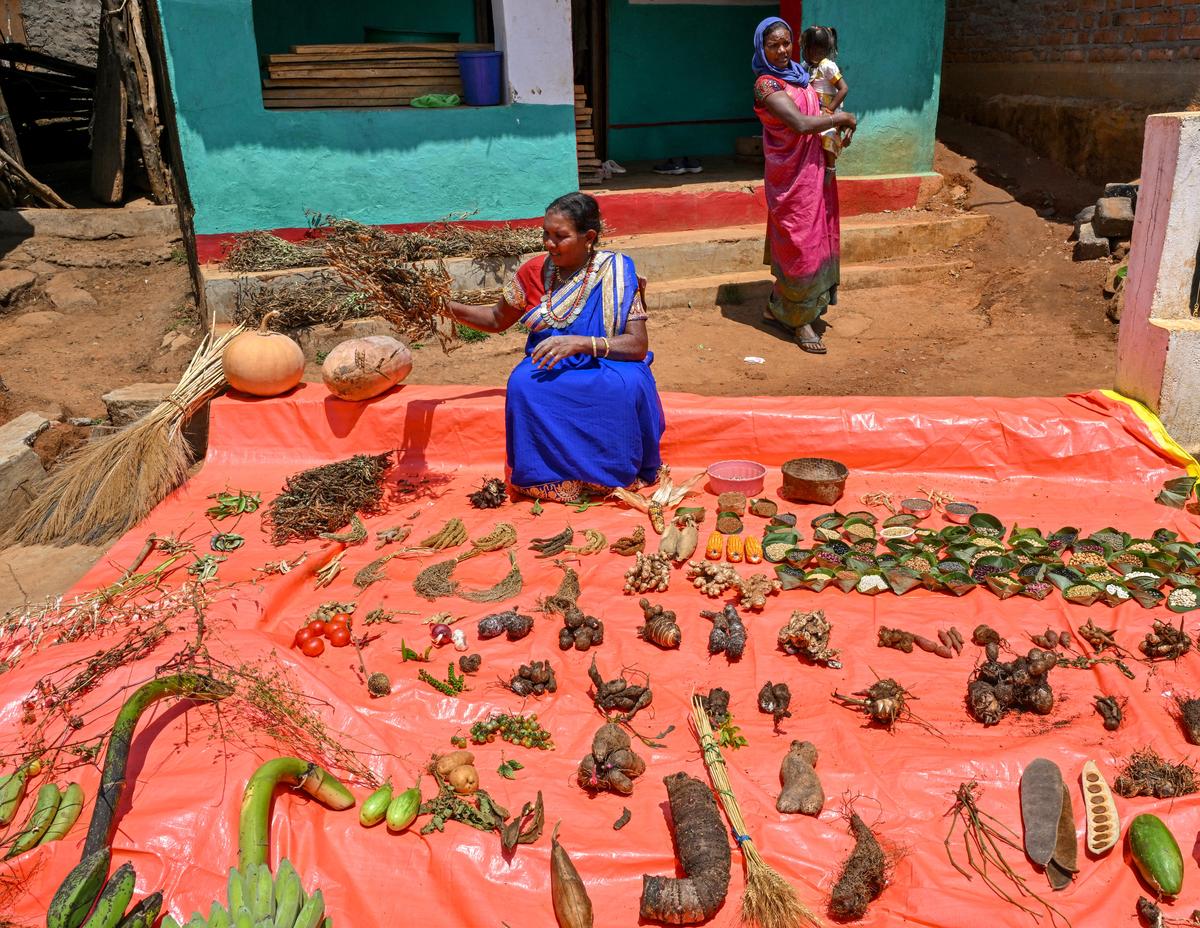
Native seed varieties being displayed by seed savers Pangi Sunkri, who won the national award of Plant Genome Saviour Community Award from the Protection of Plant Varieties and Farmers’ Rights Authority, at Gasaba village in the Eastern Ghats of Andhra Pradesh.
| Photo Credit:
KR Deepak
The crops here do not follow uniformity. Bottle gourd vines trail across supports. Tomato plants carry fruits of uneven size and colour. Millets stand alongside chillies, potatoes and local greens. Each variety carries a history shaped through seasons of selection. These are crops that have adapted to the terrain and rainfall of the hills, offering a measure of resilience that commercial hybrids often fail to match.
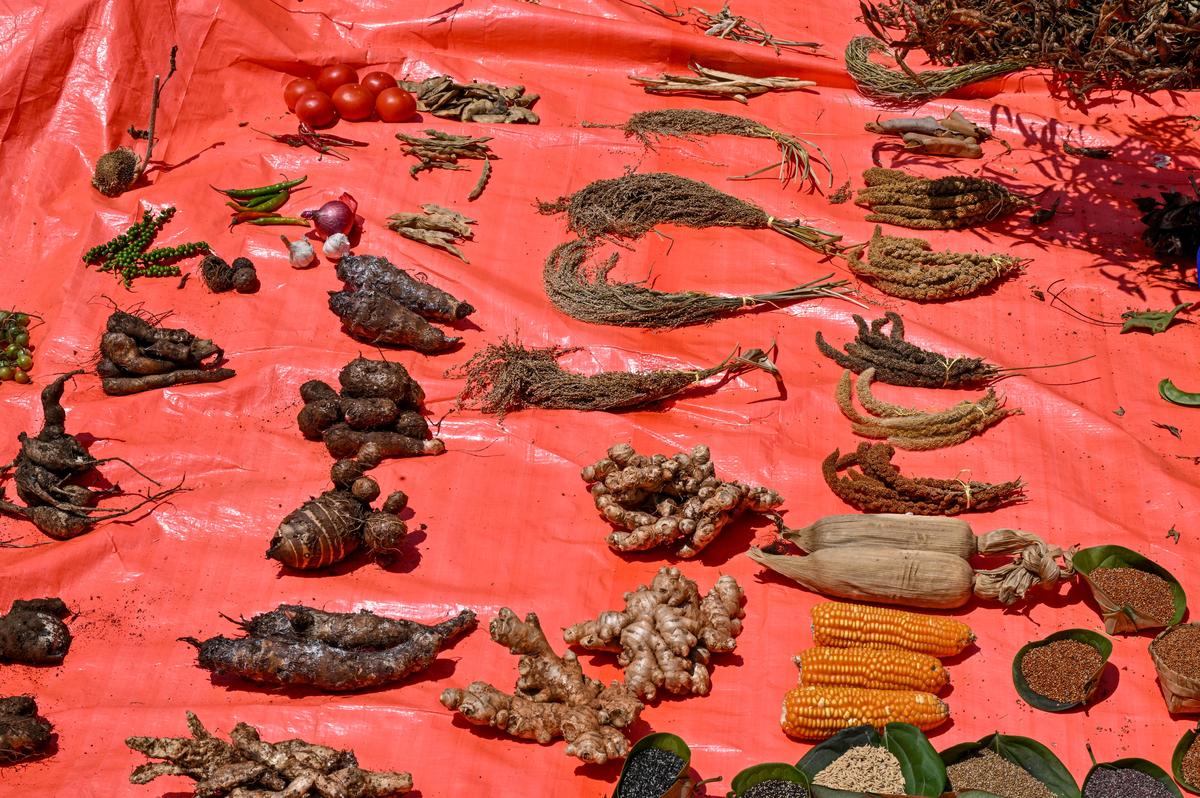
Native seed varieties being displayed by seed savers at Gasaba village in the Eastern Ghats of Andhra Pradesh.
| Photo Credit:
KR Deepak
This work is part of a larger effort led by the Sanjeevini Rural Development Society, which has, since the early 2000s, worked with farmers in villages such as Kiloguda and Suvaa to revive indigenous seeds through natural farming. What appears steady today once met resistance.
“When I proposed saving native seeds and discontinuing hybrids, people thought I was a crazy man talking about seeds,” says P Devullu of Sanjeevini Rural Development Society. Over time, he adds, farmers began to notice changes in soil health, input costs and the long-term benefits of heirloom varieties.
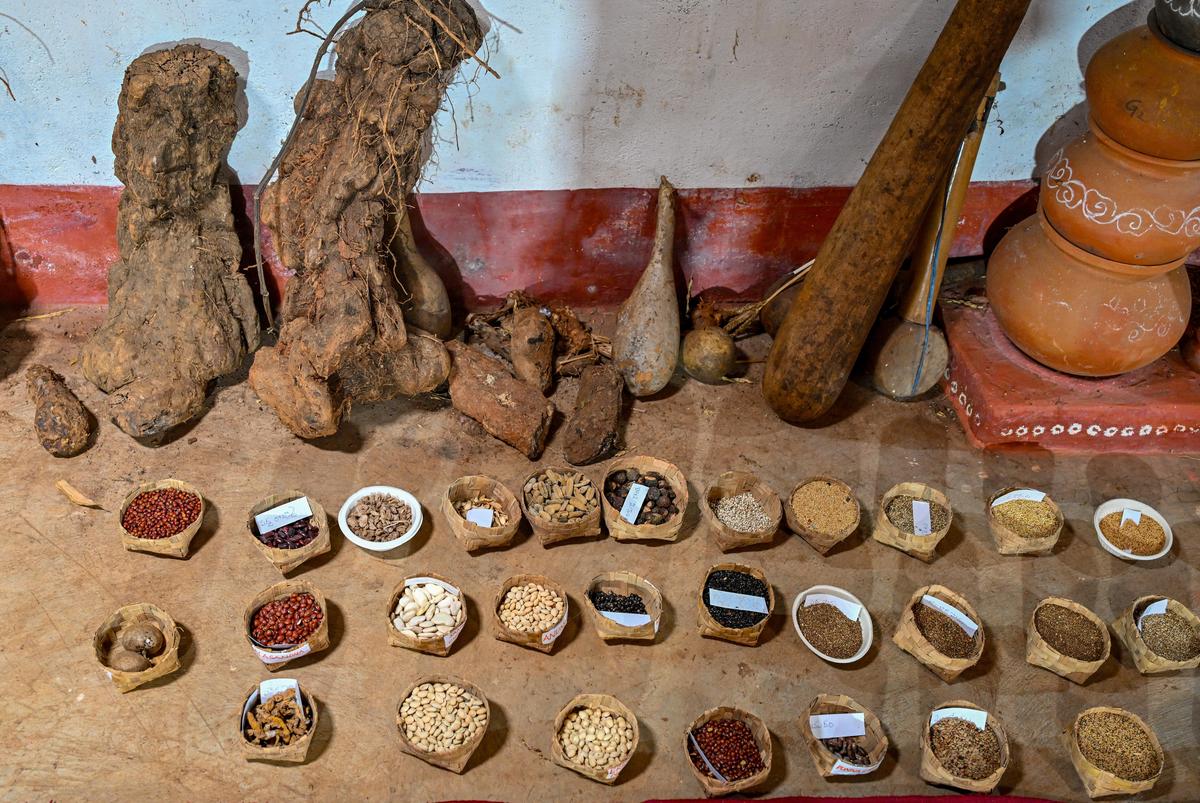
The native seed collection at the Soil and Seed Information Centre of Sanjeevini Rural Development Society at Kiloguda in the Eastern Ghats of Andhra Pradesh, about 130 kilometres from Visakhapatnam.
| Photo Credit:
KR Deepak
The transition took shape through demonstration. Plots like the one in Gasaba allowed farmers to observe how indigenous varieties performed across seasons. Older farmers, often above the age of 70, were involved in identifying seeds and guiding selection, drawing from their experience and traditional practice rather than formal training.
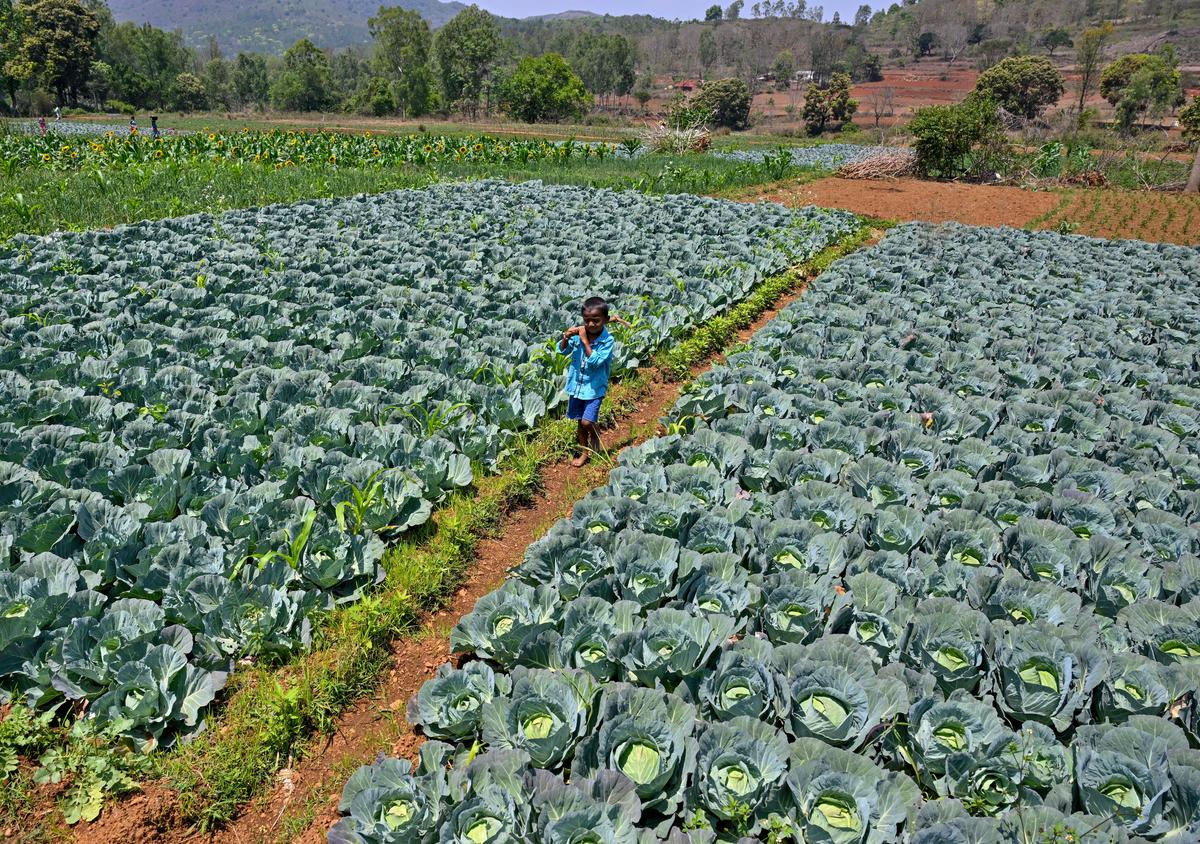
Farmers practising natural farming at Devuduvalasa village in Suvva Valley near Araku in the Eastern Ghats of Andhra Pradesh, about 130 km from Visakhapatnam.
| Photo Credit:
KR Deepak
By 2001, the effort had evolved into a seed bank called Soil and Seed Information Centre at Kiloguda, which began with about 45 varieties. Today, it holds over 360 varieties of millets, pulses, vegetables and tubers. A committee of experienced farmers oversees selection from the farms across regions and distribution, ensuring that only indigenous seeds are preserved.
Each April, the work extends into the annual seed festival, now in its 17th year. Farmers arrive carrying seeds in cloth bundles or leaf bowls, exchanging varieties and knowledge. Around 74 identified seed savers now contribute regularly, while the wider network, through the Dhimsa Farmers Producer Organisation, connects nearly 5,000 farmers across 90 villages of Andhra Pradesh.
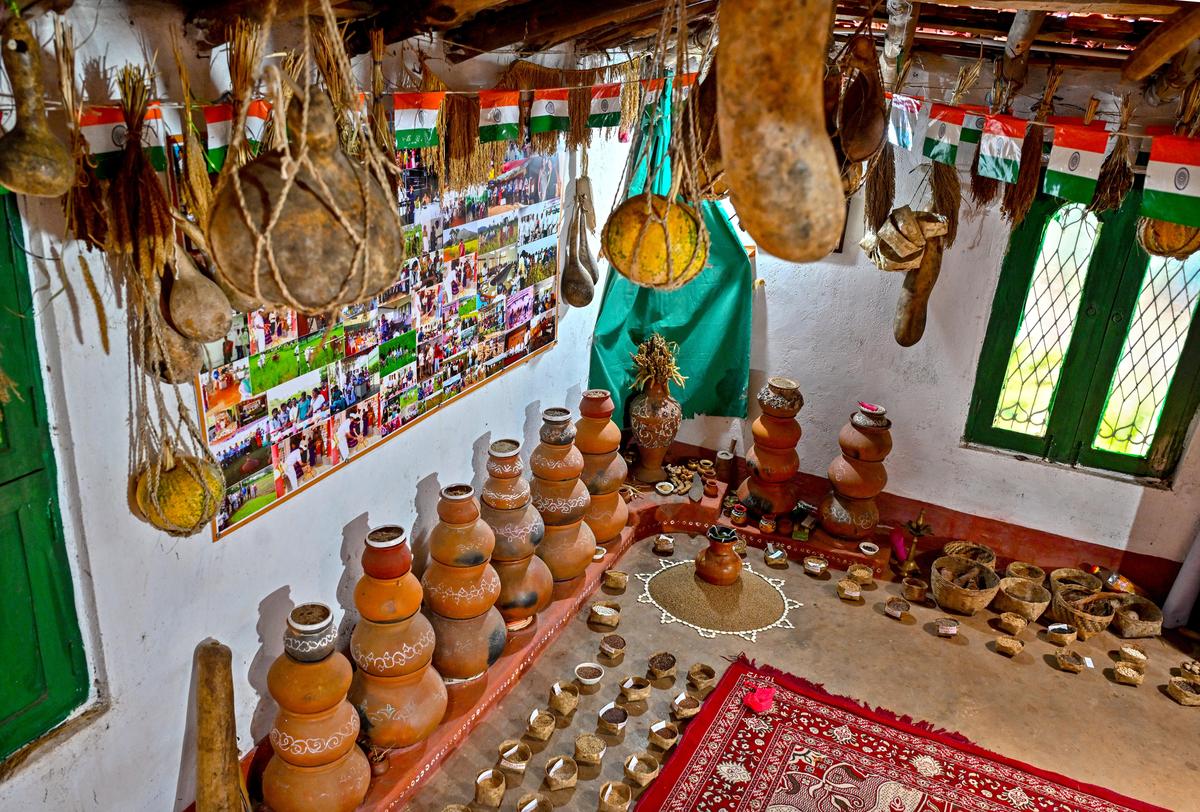
The native seed collection at the Soil and Seed Information Centre of Sanjeevini Rural Development Society at Kiloguda in the Eastern Ghats of Andhra Pradesh, about 130 kilometres from Visakhapatnam.
| Photo Credit:
KR Deepak
“For us, indigenous varieties are not just old seeds,” says Devullu. “They are seeds that have grown with this soil, adapted to its seasons and stayed with our people through generations.” From these hill slopes, the produce travels down to the plains, reaching Rythu Bazaars in Visakhapatnam twice a week.
Information centre
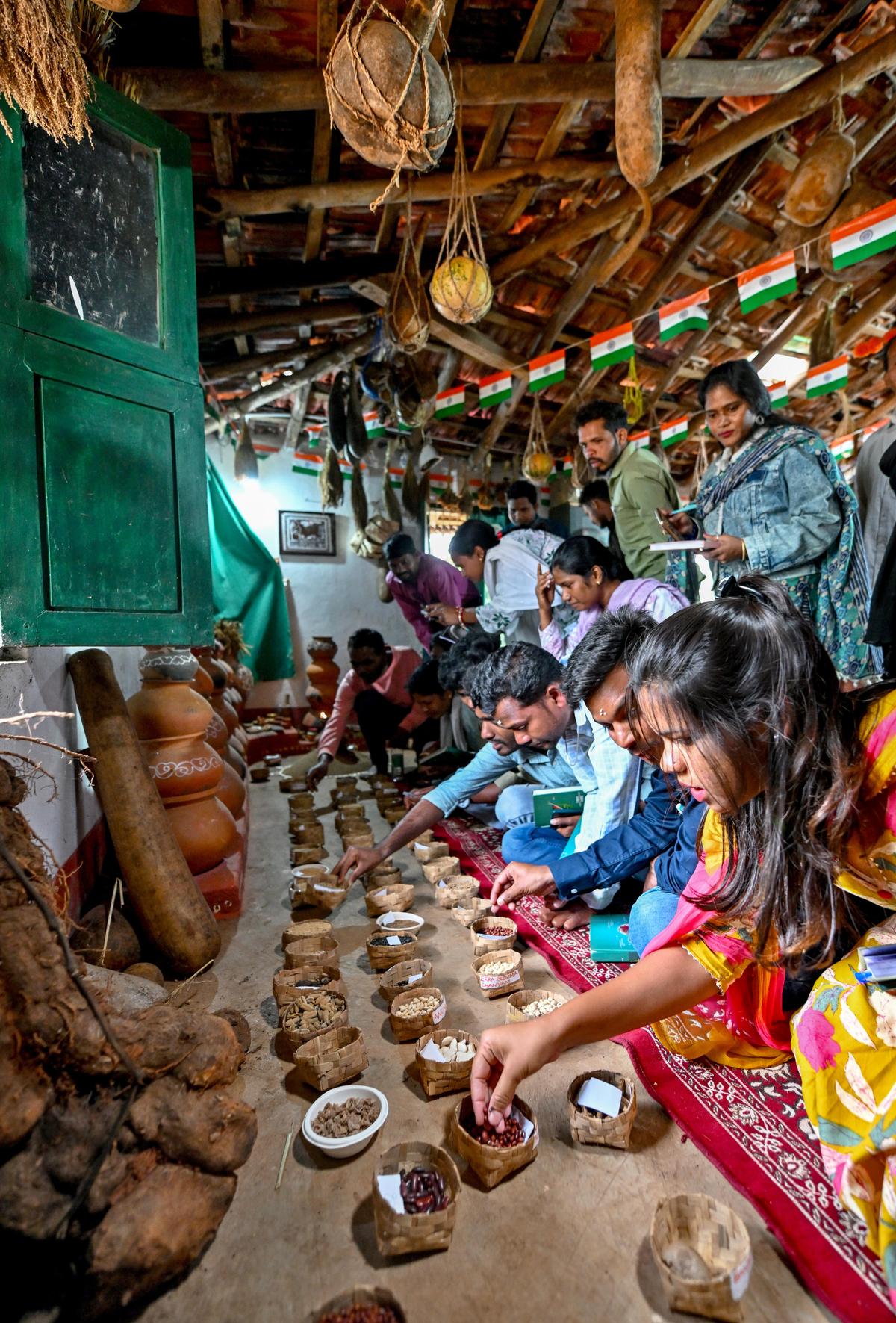
Visitors from Odisha examining the native seed collection at the Soil and Seed Information Centre of Sanjeevini Rural Development Society at Kiloguda in the Eastern Ghats of Andhra Pradesh, about 130 kilometres from Visakhapatnam.
| Photo Credit:
KR Deepak
At Kiloguda, the Soil and Seed Information Centre serves as a repository and meeting point. Shelves hold carefully labelled seeds, with millets forming a significant section. Farmers visit to exchange seeds or seek advice, while researchers from different States study the model.
The Kiloguda centre has recently started a millet processing unit and plans are afoot to add a farm-to-fork setup. The Sanjeevini team has been receiving support from the Rythu Sadhikara Samstha and the APCNF (Andhra Pradesh Community Managed Natural Farming) project under Department of Agriculture, Government of Andhra Pradesh, for expansion in other tribal areas as well.
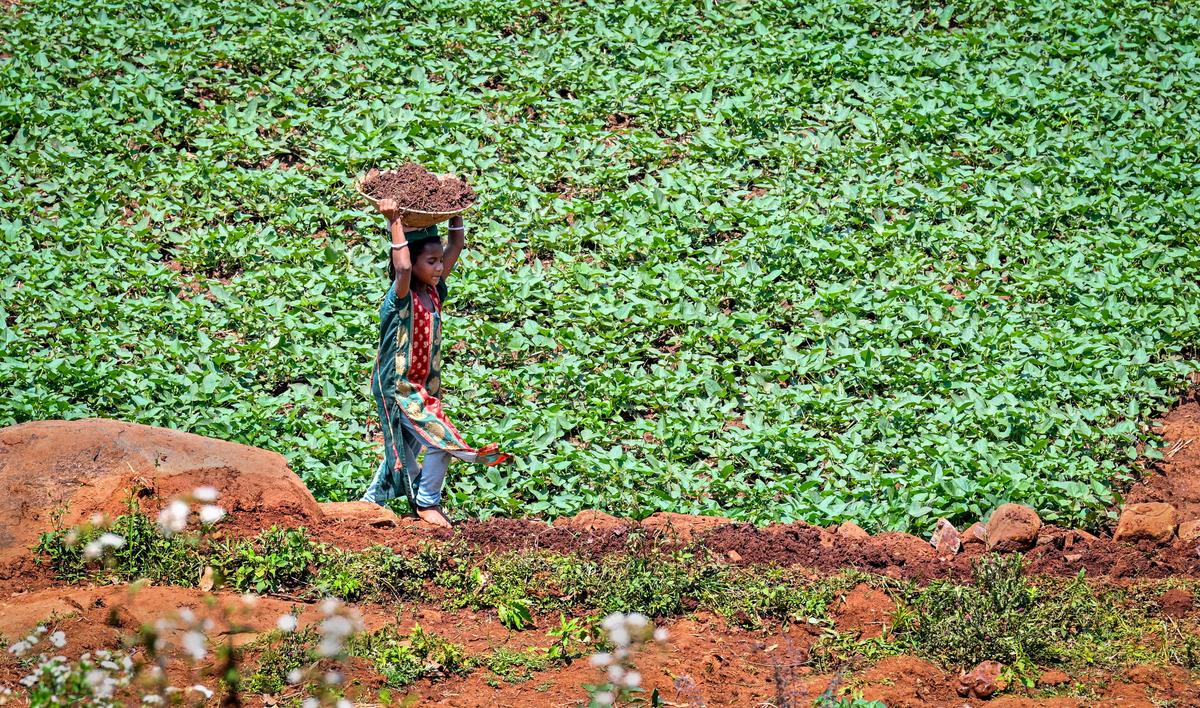
A child carries natural manure to a farm as part of natural farming practices at Devuduvalasa village in Suvva Valley near Araku in the Eastern Ghats of Andhra Pradesh, about 130 km from Visakhapatnam.
| Photo Credit:
KR Deepak
The ecological impact has become visible over time. Indigenous varieties have shown resilience under erratic rainfall and climate change patterns, while soil health has improved with reduced chemical use. Natural inputs such as jeevamrutam, a fermented mix of cow dung, urine and other materials, have replaced commercial alternatives. Economic outcomes have followed, with lower input costs and greater stability in returns.
National recognition
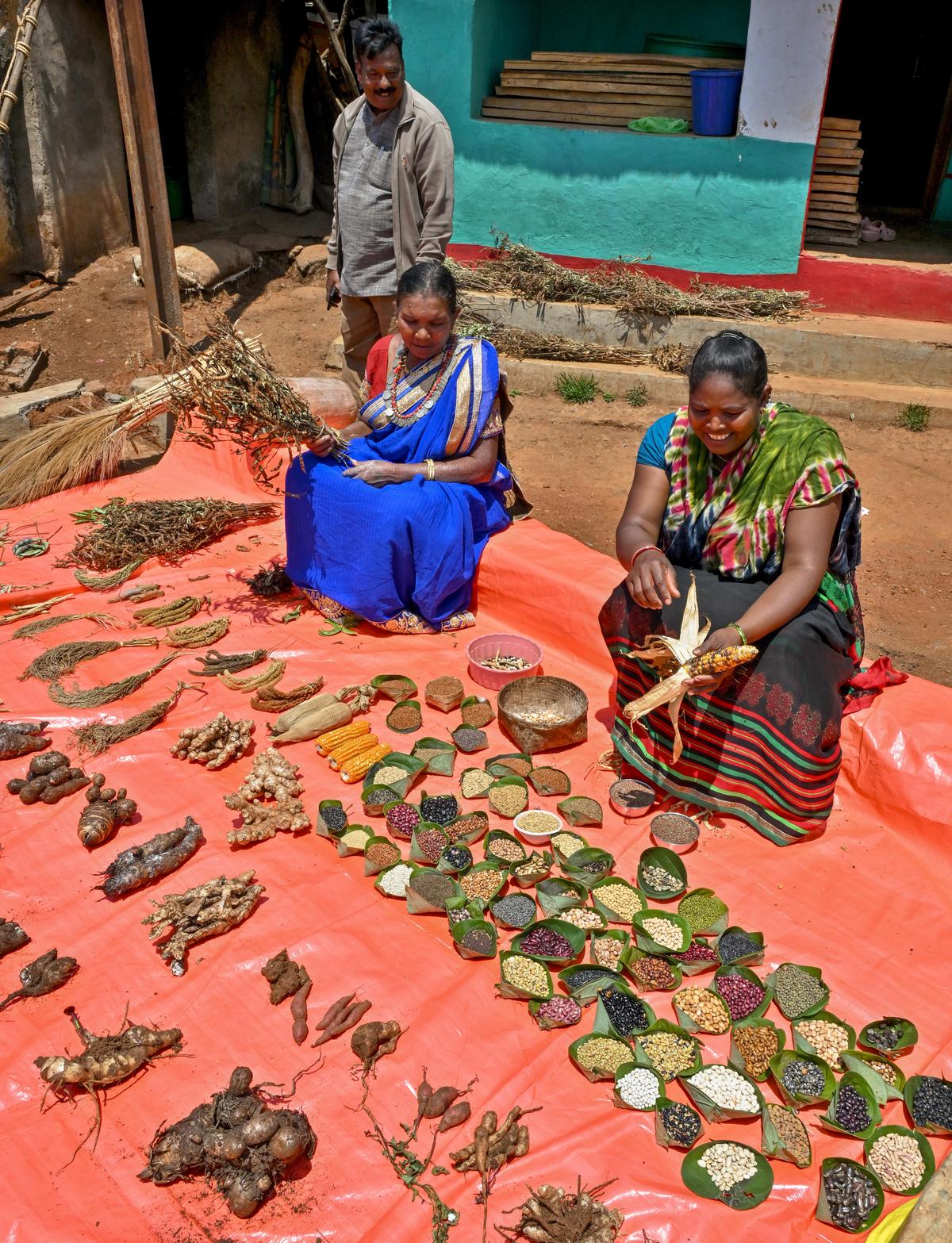
Native seed varieties being displayed by seed savers Pangi Sunkri, who won the national award of Plant Genome Saviour Community Award from the Protection of Plant Varieties and Farmers’ Rights Authority, and Radhika along with P Devullu of Sanjeevini Rural Development Society at Gasaba village in the Eastern Ghats of Andhra Pradesh.
| Photo Credit:
KR Deepak
Recognition came in the year 2011-12, when Sanjeevini received the Plant Genome Saviour Community Award from the Protection of Plant Varieties and Farmers’ Rights Authority under the Union Ministry of Agriculture. The award acknowledged its work in conserving local crop diversity across millets, pulses, cereals and vegetables. Devullu received it along with team members Sagari Venkata Narayana Murthy, Pangi Sunkri, Korra Pandann and P Ammaji. For women farmers such as Pangi Sunkri, the journey marked their first flight to Delhi as well as their first national recognition.
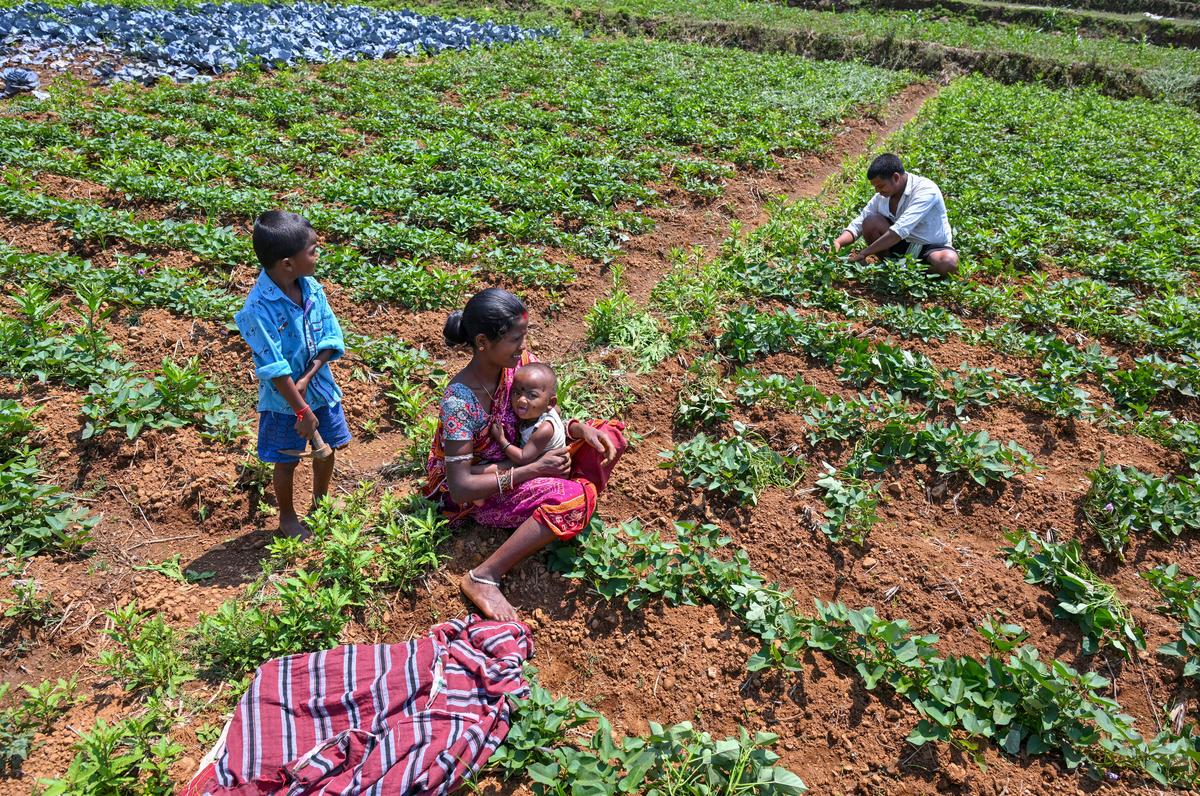
A family of farmers at work in a field, practising natural farming at Devuduvalasa village in Suvva Valley near Araku in the Eastern Ghats of Andhra Pradesh, about 130 km from Visakhapatnam.
| Photo Credit:
KR Deepak
Yet, the work continues to rest on everyday practice. In Gasaba, Bujjamma moves through the field, selecting chilli plants for seed. Knowledge here is held in practice, in what seed is chosen and what is set aside. Devullu notes a shift in recent years. “People have begun to understand what they are eating,” he says. This awareness has created a modest demand for produce grown from indigenous seeds.
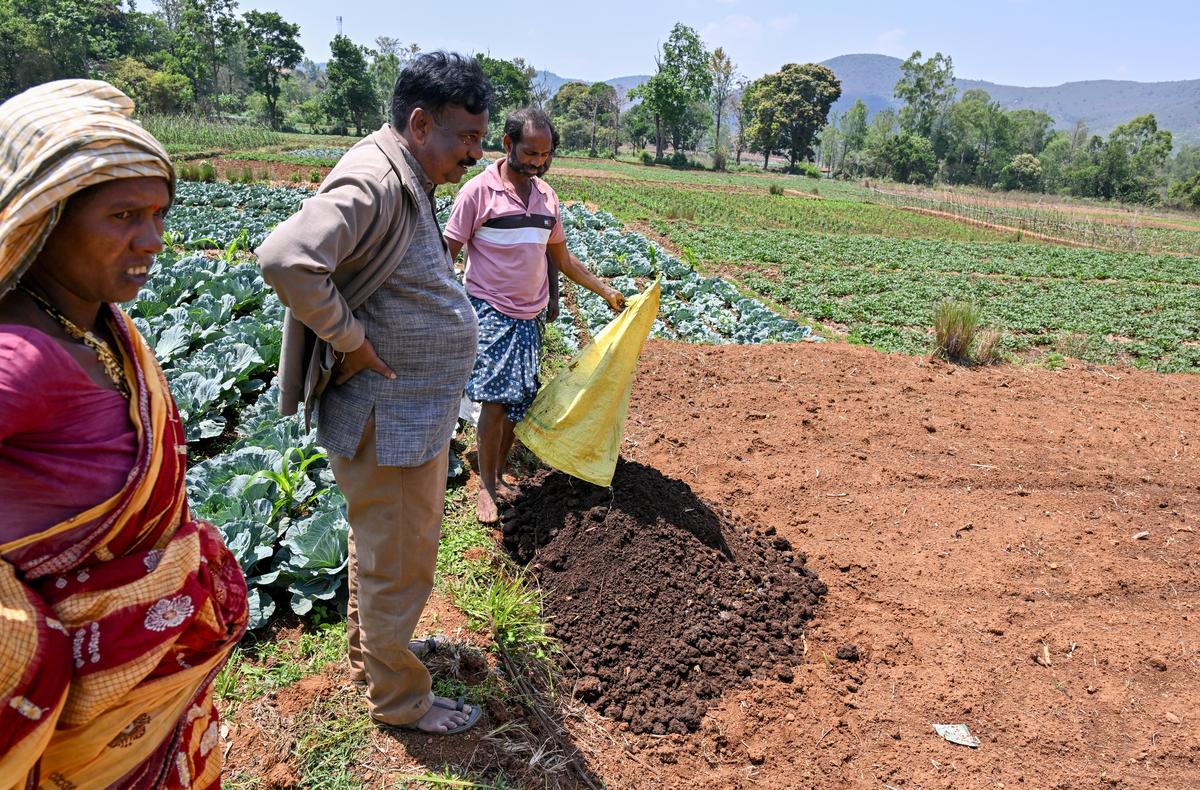
Farmers practising natural farming at Devuduvalasa village in Suvva Valley near Araku in the Eastern Ghats of Andhra Pradesh, about 130 km from Visakhapatnam.
| Photo Credit:
KR Deepak
Challenges remain. Younger farmers often move away from agriculture. Markets for diverse produce are still limited. And seed conservation requires sustained attention. Even so, the network continues to expand. The annual seed festival helps in strengethening this. It has grown into a key event in the yearly calendar and a matter of pride for farmers, who compete for the top three prizes for seed quality and diversity.
Back in Gasaba as the day moves forward, the work of seed selection continues. It is part of a cycle that has taken shape over two decades, held together by farmers who have chosen to retain control over their seeds and, with it, their way of farming.